New To Raw Feeding

First of all.....pat yourself on the back that you're doing a great thing for your dog by offering them a great diet that has not artificial flavours or preservatives in it. Best of all, you can customise this diet to THEM.

 Second of all......some people can make raw feeding sound REALLY complicated. It's NOT! Please don't let this put you off

 Honestly, its really not as complicated, confusing or daunting to feed raw as it may seem at first. But, you need to have a little idea about what you are feeding to get an idea of a balanced diet - key words here BALANCED DIET

There are alot of great quality raw food brands out there that cater to all budgets. Different brands use different mincing methods for textures - some are mushier, some are chunkier, some are just meat, some will have vegetables and herbs mixed in. For most raw feeders, they choose meals that are already made up and you simply defrost & serve - this is the easiest and most popular choice

You'll see & hear the words 'Complete Meal"......"80:10:10"......and I think this is where people start to get confused or worried - they're both the same....right? Well....the main difference between an 80:10:10  raw meal and a Complete raw meal comes down to balance & formulation:

80:10:10 simply means the mix contains:

80% Meat
10% Bone
10% Offal (usually liver and another secreting organ - more on that later)

This mirrors a 'whole prey' ratio diet and provides the natural base for a raw diet. It's brilliant for DIY feeders who like to mix and match proteins, add their own extras (like veg, herbs, oily fish, or supplements) or  feed variety throughout the week

A Complete raw, on the other hand, could have the same 80:10:10 base, PLUS added ingredients to meet all the essential vitamins and minerals your dog needs to meet FEDIAF nutritional guidelines. 
This can include extra vegetables, seeds, herbs,or natural supplements to make is a balanced "ready-to-serve" meal without needing to add anything else

So, in short:
80:10:10 = great DIY base, or those looking to stay away from extras due to intolerances / allergies, or needing an exclusion diet

Complete = nutritionally balanced & ready to serve

Both are great options, it really depends on how you like to feed and what works best for your dog

But honestly, I'm a big fan of mixing it up and feeding a variety of proteins and meals and rotating raw food  brands. That way you are sure to be getting a wide and balanced diet of everything - variety is the key to life (and happy tummies!) and you can never offer too much variety, different proteins, textures and nutrients all play their part


The Golden Rules of Raw Feeding:


Variety of Proteins = Balanced Diet

The key words again and the main objective here. Variety is the spice of life....aim for at least 4-5 different proteins (turkey, chicken, lamb etc that is what we mean when you hear the word proteins) the more the better. This also includes ALL different parts of the animals, as there are many different nutrients, vitamins, Amino Acids etc contained in different meats and different parts - the more you include, the larger the net you are casting to gain a lovely, all round well balanced diet. Think of it this way - look at ourselves for an example, if we just ate one particular thing and nothing else....we would become deficient in something......the same goes for our pets. This is also a good place to mention allergies to meat - this is something I am seeing more and more over the years, if you suspect your pet may have allergies to certain proteins give me a message as we can talk about an elimination diet  

Aim for Balance Over Time

The ultimate goal in raw feeding is to aim to get a balance of all the necessary nutrients, vitamins & amino acids over a period of time....weeks.....it doesn't need to be achieved over days or in every meal - our fur friends are designed differently to us! 

Your Pet's Weight 

You will need to have an idea of how much your pet weighs as you'll be working out how much to feed. A good place to start is 2 – 3% of the body weight of an adult dog (don't worry - I've included a handy formula to work this out further down!) This can be split over 2 meals. 

Remember these are guidelines - all dogs are individuals and they are different to each other - also take into account activity levels. If they are very active, they'll burn through more calories so will need to be fed more. Keep an eye on their body condition - with a healthy dog you will be able to feel the ribs (not see them) and they will have a waist when you look from above. You can slightly increase/decrease the amount by keeping an eye on your dogs weight
What is a Raw Diet?

You'll hear many terms used - raw feeding, BARF diet (Biologically Appropriate Raw Food), whole prey feeding, DIY feeding, meat, bones, offal.....lots!


The idea behind the raw diet is that it closely resembles the diet of wolves, of which all dogs descend from. It includes, meat, bone, offal and (depending on your dog) vegetable, seeds, herbs etc (but surely wolves didn't eat these in the wild I hear you say - in this day and age there is ALOT of evidence of the power of adding these to the diet, and many choose to do so to add a boost of goodness. A raw diet, free from artificial fillers/ grains that are often put into dry kibble or wet pet food, helps to compliment how the dog is built to cope with food too:


Canines

Look at the jaw & teeth of your dog....pretty pointy and designed for tearing and crunching. The jaw itself is designed to go up and down (no side to side movement like a herbivore that needs to grind matter between the teeth to start the breaking down process that is continued further in the gut), with immense crushing power between those jaws. 


Shorter Intestines

Wolves have evolved with a shorter intestine compared to herbivores, as the diet they consume (meat) easily digests, and they also have digestive enzymes designed to break down this diet and absorb the necessary nutrients. Herbivores on the other hand, have a longer intestine as they need to allow their food to pass through slowly, to break down easier (as plant matter is harder to digest) and then making it easier to absorb through the gut.


What is Included in a Raw Diet?

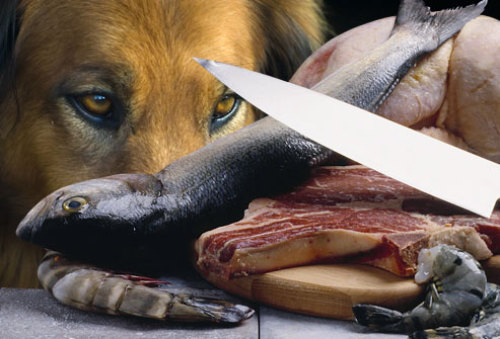
Fresh meat, raw meaty bones, and offal but at different amounts to get an overall well balanced diet, often referred to as 'ratios'. 

80:10:10 meals are usually made up of some of the following:


Examples of Meat/Muscle for the 80%:

Green Tripe

Heart (but no more than 20% in the overall diet, remember balance)

Meaty trim/ offcuts / chunks

Tongue / cheek

Gizzards

Tracheas

Breast / fillets


Examples of Bone for the 10%:

Chicken, Duck, Turkey Wings

Carcasses / backs

Necks

Ribs

Chicken & duck feet

NO WEIGHT BEARING BONES - as in legs of cows, sheep etc...the bones are thicker, and more likely to break a tooth!


Examples of Offal for the 10%

Liver - always needs to be 5% in the diet

Other secreting offal to include in the other 5% are:

Spleen

Kidney

Pancreas

Brain

Testicles


Dont Forget the Fish & Eggs!

Thats right!

Fresh oily fish full of healthy Omega fats - go for Sprats, Sardines, Mackeral. Add to a meal (whole or chopped up) twice a week or use a fish complete meal 

Eggs - raw eggs, shell, yolk and all! A raw egg, twice a week is again like an extra little tonic on top of the diet. You can either crack the egg and mix it all up (some dogs are not keen on the egg shell, so can always try without) 

Thats the Meat Part, What About Vegetables/ Herbs / Seeds?

"Complete raw meals"  will have these added in

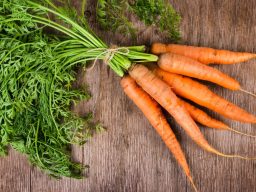
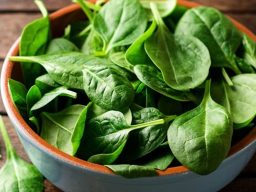
The idea of adding vegetables, herbs and 'superfoods' is to add a wellbeing boost to what is already a great diet base -there are many benefits from certain veg (spinach for example, full of iron) and herbs that help and support the immune system. Some dogs appreciate these added bonuses, while others do not like the taste of veg!  OR they may have an intolerance to certain veg (if you have a dog affected by yeast, its best to not feed a sugary veg like carrot for example) 

There are plenty of raw dog food brands that offer both a '80:10:10' and 'Complete raw meals' - your dog will let you know which one they prefer!

Besides, you can always add supplements (these are a great way to build a healthy gut), fish and eggs to suit the needs of your dog

Mixing it up between different proteins, different brands, and different meals is the best way to offer a raw diet
Raw Feeding Starter Guide

 Ok, you've done a little reading, have an idea of what a raw diet is all about....and now want to try it! 
Follow our handy guide on how to start... 

If you are starting puppies onto raw please use the Puppy Raw Feeding Guide further down - they need a different setup!


Step 1:
Time to Order the Food!

First, I always recommend ordering some Probiotics - these are brilliant for gut health and getting your dog's stomach ready to make the move from a processed kibble diet to a fresh, raw diet. Probiotics are full of healthy bacteria - a great one to add is Kefir, take a look here
/SHOP_SLUG_PLACEHOLDER/Karnlea-Goat-Milk-Powder-PLUS-200g-p794659507/

We recommend a straight switch - this usually works for most dogs. Literally moving onto raw in the morning, no mixing with kibble.

The other way is to slowly, move over - each pet is individual, and sometimes a slower route is the best way - after all you know them best!

Both routes are listed below: 
WHITE - THE STRAIGHT SWAP ROUTE
YELLOW - SLOWER ROUTE

 Keep in mind, that the body will need time to adjust to a new raw diet (and if you have been feeding dry kibble/wet food there is also a good chance they may go through a detox stage which can take 6-8 weeks to get it out of their system). Poo's may be a little soft for a few days while the body also adjusts the PH in the stomach, but should then firm up. 

Step 2:
 Weigh That Pooch & Work Out How Much to Feed

 First, take a good look at your dog - are you happy with how they look or do they need to loose a little/gain a little? You will need to do a little maths but don't panic...its a simple formula once you know how!

If you are happy with the look of them, then start with 2%-3% of their body weight - this is called "maintaining the weight". Try it for 2 weeks and see whether you need to increase or decrease

 A little overweight? Start with 2% and try for 2 weeks, and then see if it needs adjusting a little lower (1.5% for example)
A little underweight? Start at 2.5% and try for 2 weeks, and again, reassess

 As a general guide, Adult dogs can be fed between 2-3%, while Senior can be 1-3% of their bodyweight. These are guidelines - if your dog is very active or has a fast metabolism they may need more. The same if they are less active, they may need a lower percentage - each dog is individual but its very easy to tweek the raw diet to suit them.
 Remember to try and put on/take off weight slowly, its much better for them if its done gradually and you will run into less problems

Ok, the Magic Formula:

For example, I have a 10kg dog, that doesn't need to drop/or add any weight so I will be starting on 3% and I need to find out how much to feed per day: 

Turn the Kg into grams: 10000 x 3% = 300g per day (split over however many meals you would like) 


Step 3.
 How to Swap Over

There are many ways to switch to raw, but I have found the easiest is to get your food prepared and make the switch the next day in the morning - no mixing a bit of raw with the dry food in the same bowl - some dogs are ok with this and have no issues, but raw and dry food digest at different rates through the intestines....dry kibble is also designed to swell to make the dog feel fuller....mixing the two could cause an upset tummy. 

We want to try and get the gut ready with healthy bacteria to get off to the best start on fresh raw! So remember your friendly bacteria Kefir

STRAIGHT SWAP ROUTE
WEEK 1
 An example to give you an idea of how to start:

White Meat & first Gentle Protein.
For the first week use a gentle white meat....(such as turkey, chicken, rabbit, quail etc as these are easy on the digestive system.)


SLOWER ROUTE:
WEEK 1
We start with green tripe for the first 4-5 days - either lamb or beef tripe (lamb is a stronger smell!) Its full of amino acids and packs a punch promoting good gut health. Stools may go a bit darker/blacker and softer as the body adjusts, After 4-5 days jump onto WeeK 2 below


WEEK 2
Straight Swap & Slower Route
Add Tripe with Meat
Such as Duck & Tripe, Turkey & Tripe, Chicken & Tripe etc 

Try adding the first protein with tripe, so if you choose turkey, go for a turkey & tripe version for a few days before moving onto a complete turkey meal. Tripe is a bit wiffy but it is packed full of healthly bacteria and amino acids that promote good gut health (its hard to believe from the smell of it!). IF your dog isn't keen on tripe, move onto the next protein - another white,  gentle protein is ideal

WEEK 3
Straight Swap & Slower Route
Feed the next protein (for example if you did tripe, then turkey and tripe, then turkey, now try a different protein....for example chicken) and keep an eye on the poo! It may change colour due to the type of meat you are feeding and also may go lighter/white as the body adjusts to digesting bone - this should only be for a few days. If it lasts longer then please get in touch and we can look into adding some boneless into the diet

WEEK 4
Straight Swap & Slower Route
Its ideal to try another white protein before going onto a red meat (like beef or lamb) and also keep any eye out for any changes - if your dog starts itching more than normal then it may be a sign they have an intolerance/allergy to that type of protein (chicken is normally top one for this). If this does happen it's not a bad thing as we can eliminate that protein from their diet - there are plenty of proteins out there to try! Also if they have a very upset tummy all of a sudden straight after a certain protein, this too could point towards an intolerance

You should start to seeing poo's become smaller and more formed. Poo's may go white as the body is digesting the bone - but if they are consistently white for a few days or straining to go, then add a little boneless mince or meat to their meal to dilute the bone - every dog is individual

Aim For Around 5 Proteins a Week or Fortnight
If you hit 5, great, but the more the merrier! That's a great, well balanced diet with lots of different nutrients from lots of different meat


Adding Oily Fish & Eggs
 Once you are up to at least 5 proteins in the diet now is the time to start adding some fresh oily fish (or tinned but make sure they in spring water/oil and not brine, brine is too salty). 

Go for sardines/sprats/mackeral. Add a few to meals (whole or chopped up) twice a week as they're full of Omega 3 fish oils; or try a fish complete twice a week. If your dog really doesn't like fish - try natural dried fish treats, a fish broth (can be frozen ice cube size or leave it out for 15mins before a meal to be semi soft)

Give it another week, and you can also add a raw, whole egg to a meal, twice a week for an extra boost - eggs are full of minerals & vitamins, plus Amino & fatty acids that are extremely good for your dogs skin & coat (top tip - try crunching up the egg and mix into a meal with a fork, shell & all! If your dog isn't keen on the egg shell, just feed the inside, or if your dog doesn't mind try giving him a whole egg on its own without smashing it....its good for them to figure out how to get into it! 
Note: You might want to try this up the garden...it will get messy!

BONELESS MEALS
 Once a week, I like to give my guys a boneless mince meal - it can be boneless mince (can also be tripe) or boneless chunks (or a bit of both!) Just to give them a rest from digesting bone. You don't have to do this, but its always worked really well for my dogs.  

GIVING BONES
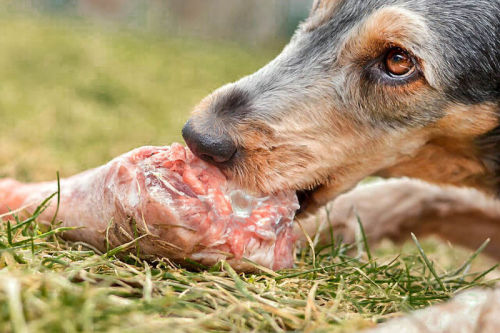
 When feeding raw, we recommend feeding raw meaty bones - chicken wings, duck wings, chicken necks etc added to a meal are great for oral health and are made up of soft cartilage so are great starter bones and crunch easily. Also take into account the size of your dog to the size of the bone (things like turkey necks are great for big dogs etc)

If your dogs poo is coming out very white or they're struggling to poo (constipated) then reduce the bone treats - you can also pop a bit of extra boneless mince or tripe to help them

A good rule of thumb is to mix your proteins - so if one day you feed chicken (or other poultry minces that can be higher in bone) then the next day feed a red meat (beef, lamb etc) to even out the amount of bone 

 
FAQ's 
About Raw Feeding


How Do I Start Raw Feeding?
 First - do a little reading online/Facebook raw feeding forums to get an idea about raw feeding. Next, visit our Raw Feeding Starter Guide to see how to go about it. The next step is to set a start date and start feeding only raw food from that day - and in the meantime make sure you have all the ingredients you need! Oh, and make sure you have enough freezer space! ​ 

Do I Need to Feed Organs/Liver? My Dog isn't keen on them.. 
Yes - there are essential vitamins and nutrients in these organs, and to make sure your dog is having a well-balanced diet they need to be included. In 80:10:10 meals and complete raw meals they're already mixed in, but if you are doing complete DIY there are many tricks that can be used - cutting them into super tiny pieces and mixing in is a popular one, also a super quick flash fry on in a frying pan can slightly change the texture and make it more appealing (its often the soft, gooey texture that puts dogs off). Secreting organs can be quite rich and only need to make make up 10% of the overall diet – half of which should be liver (5% of overall diet). These organs include liver, kidney, testicles, brain and spleen - and try to include them from as many different animals as you can. Heart and lung should be fed as muscle/meat, not as organ. Remember - heart should be limited to 20% of overall diet. 

Do I need to add fruit, veg or other supplements? 
If you are feeding a balanced and varied raw diet at the correct ratios of 80% meat/muscle (which should include some heart, oily fish and tripe), 10% bone and 10% organ, there should be no need to supplement the diet. Veg, fruit, herbs and supplements can be added as an option and offer some brilliant overall well being boosts that help many pets

I’m worried about feeding bones, are they dangerous?
 When feeding raw, we recommend raw meaty bones. Cooked bones are a big no no, as the cooking changes the structure of the bone and its more likely to splinter (this is where many people are worried when you mention bones, but its the cooked bones that are the dangerous ones. 
That doesn't mean there isn't some risk to eating raw bones - there is always a risk of choking, so never leave your pet unsupervised when eating bones. Your pet has evolved to eat meat & bone - from their teeth and jaws right down to their digestive system that is designed to manage these - but that doesn't mean your dog will KNOW how to crunch a bone straight away, and this is where you may need to teach them while they get the hang of it. Start introducing poultry bones first such as neck & wings as they super soft and a great starter bone - its a good idea to be able to hold onto the bone and encourage them to crunch, chew and tear - some dogs may need more encouragement then others as we often tell them NOT to crunch and tear up things! 
So give them time to figure out how to use the strength in their jaws. 

You can also use a meat mallet to smash bones in wings etc, making them easier to crunch up

Please try and avoid taking the bone away - just sit quietly and gentle encouragement (wearing gloves is recommended!) If you keep taking the bone away it can make the dog see you as a threat and begin guarding their food - I very much doubt you would like someone to keep taking your dinner away from you. 

All dogs can have bones, both tiny dogs and large - but keep in mind to give the right size bone to the dog - too small a bone can cause a choking hazard. Also, if they show a tendency to try and bolt their bone down, this is too high risk & I wouldn't recommend feeding bones. If you are feeding completes, remember there is already ground up bone in there,  but if you are complete DIY and have a 'bolter' please don't be disheartened, there are other ways bones can be added to ensure a balanced diet such as ground up bone - Facebook raw feeding pages are a great place to ask for help if this problems arises! Great raw bones to include in the diet are necks, wings, ribs, carcasses - avoid weight bearing bones from larger animals (legs) as these bones are so dense they are able to break a tooth! 

There are also those guys who just do NOT enjoy crunching up bones! Again, if feeding completes there is bone already included and if DIY you may need to add ground up bone. But for teeth cleaning you can try other methods (doggie toothbrush etc)

Can I refreeze after defrosting?
 Yes, due to many raw feeders having to divide packs into smaller portions, this is quite a common practice amongst raw feeders. We advise to always defrost in the fridge so products are kept at a chilled temperature and not allowed to reach room temperature to keep bacteria growth to a minimum. I forgot to defrost food for today, what can I do? Don’t panic and never use a microwave! Place frozen packs into a bowl of tepid water for half an hour or so. Alternatively, feed frozen – it’s perfectly fine and a lovely treat during warmer weather! 


Puppy 
Raw Feeding Guide


 Read through our main Raw Feeding Starter Guide above to gain an idea of how to start, but when feeding puppies you need to change the amount you feed as they will be growing!

 This handy chart will give you an idea of how much to feed. This is just a guide so its important to regularly weigh your puppy and keep a record of their weight - keep an eye on their condition and increase/decrease their food as needed.

 7 - 10 Weeks = 8 - 10% of their bodyweight 
10 - 16 Weeks = 7.5 - 8.5% of bodyweight 
16-20 weeks = 6.5% - 7.5% of bodyweight 
20-24 weeks = 5.5% - 6.5% of bodyweight 
24 - 36 weeks = 4.5% - 5.5% of bodyweight 
36 -56 weeks = 3.5% - 4.5% of bodyweight
 56 - 68 weeks = 3.5% of bodyweight
 68 weeks + = now its time to change to"maintaining the weight" at 2-3% 

Try and resist the urge to over feed to get weight on them quickly - it can cause problems with their growth plates & joints, affecting them in later life (especially large & giant breed puppies) 

Each puppy is an individual and will grow at their own pace, and don't forget they will bulk out later as they get older. 

If you need any help just pop us a message!


We need your consent to load the translations

We use a third-party service to translate the website content that may collect data about your activity. Please review the details in the privacy policy and accept the service to view the translations.